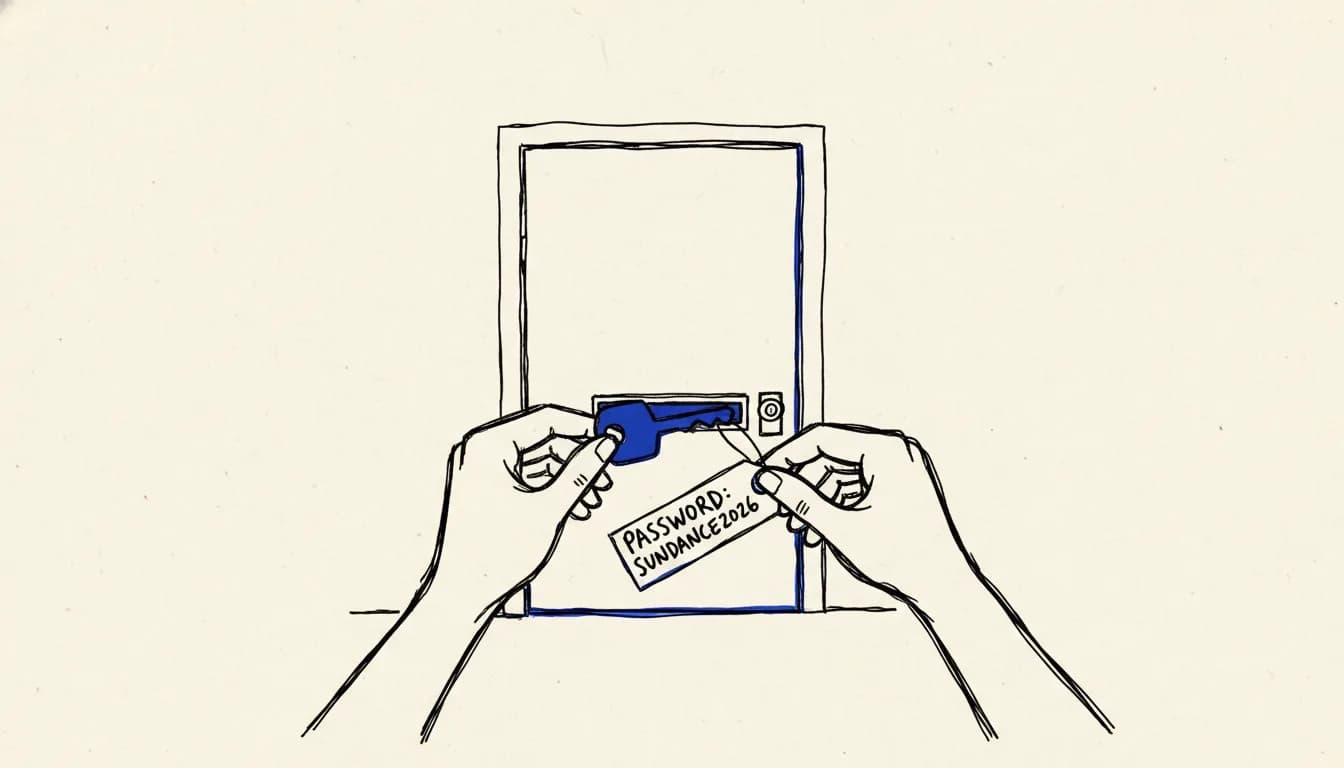
Most filmmakers think of the screener as a file they upload once and forget. In practice, the screener may be hosted on Vimeo, FilmFreeway, YouTube, your own site, or a dedicated screener service. Wherever the video actually plays is where the useful access data lives.
Analytics can show useful viewing patterns, but they are evidence, not certainty. Treat them as a diagnostic tool, not a verdict on what a programmer thought.
The setup: use a paid private host
Vimeo is still a common choice because paid plans support privacy controls such as password protection and "Hide from Vimeo". Check current Vimeo plan names, pricing, storage, and analytics before you buy; the product tiers change.
Set up each film as a single Vimeo upload. The privacy setting should be "Hide from Vimeo" (the video does not appear in Vimeo search or your public Vimeo page) plus password protection. Avoid "Private" mode, which can block festival access entirely depending on the festival's submission tooling.
The per-festival access strategy
The most useful thing you can do for screener management is keep access traceable. Use a separate link, password, note, or private folder per festival or per festival tier when your host supports it. Do not assume Vimeo analytics will tell you which password a viewer used; use your own tracking notes to connect a view pattern to a submission route.
Common conventions:
SUNDANCE2026 for SundanceSXSW2026 for SXSWUK-TIER-2-2026 for a tier 2 UK festival batchPROGRAMMER-EXTERNAL-2026 for direct shares to a sales agent or named programmer
The downside: you have to update each festival's submission if you rotate passwords or replace a link. Some filmmakers use one master password per tier (TIER-1, TIER-2, TIER-3) to keep the rotation manageable.
What video analytics can show you
Depending on your host and plan, analytics may show:
- Approximate location (city level)
- Device and browser
- Watch duration and the precise point at which the viewer stopped
- Number of times the screener was loaded
- Date and time of viewing
This is enough to spot obvious access problems and broad watch-through patterns. It is not enough to prove which individual programmer watched, why someone stopped, or whether a full watch means selection is likely.
What watch data actually tells you
Be careful drawing conclusions. A festival that watched the full screener is not necessarily going to select. A festival that watched only the first 90 seconds is not necessarily a rejection (a senior programmer may have flagged the film for a second screener to a junior programmer who watched fully).
Watch data is most useful for:
- Confirming the screener works (if a festival's notification window closed and they never opened it, the submission may have technically failed)
- Calibrating expectations (low watch-through across all festivals = the opening 90 seconds may be the weakness)
- Identifying patterns that might suggest deeper consideration, while remembering that only the festival knows its internal screening process
Vimeo is not piracy-proof
Vimeo's password protection is enough to stop casual sharing but not professional piracy. For high-risk material (commercial features with high theatrical value, IP-sensitive doc subjects), use a paid DRM service: SafeStream, Vidflex, MediaSilo. These add watermarking and viewer-specific encryption at the cost of around £10 to £40 per month plus per-view charges.
Common screener mistakes
- Changing the password mid-cycle and locking out screeners halfway through
- Uploading the wrong aspect ratio (vertical phone footage instead of the 1.85:1 master)
- Burning festival-name-watermark on a screener that gets shared between programmers, exposing the routing
- Using "Unlisted" on YouTube as if it were private. Anyone with the link can view or share it, and public playlists or embeds can expose it.
- Not updating the FilmFreeway link when the Vimeo URL changes
Frequently asked questions
What Vimeo privacy setting should I use for a festival screener?
Use "Hide from Vimeo" so the video does not appear in Vimeo search or on your public Vimeo page, and add password protection on top. Avoid "Private" mode, which can block festival access entirely depending on the festival submission tooling. Check current Vimeo plan names and features before you buy, since the product tiers change.
Do screener analytics tell you who watched your film?
No. Analytics are evidence, not certainty. Depending on the host and plan they may show approximate location, device, watch duration, where the viewer stopped, and how many times the screener was loaded, but they cannot prove which individual programmer watched or why someone stopped. Use your own tracking notes to connect a view pattern to a submission route.
Does a full watch mean a festival is going to select your film?
Not necessarily. A festival that watched the full screener is not guaranteed to select, and one that watched only the first 90 seconds is not necessarily a rejection, since a senior programmer may flag a film for a junior programmer to watch fully. Watch data is most useful for confirming the screener works and calibrating expectations, not for predicting a decision.
Is Vimeo password protection enough to stop piracy?
Vimeo password protection is enough to stop casual sharing but not professional piracy. For high-risk material such as commercial features or IP-sensitive documentary subjects, use a paid DRM service that adds watermarking and viewer-specific encryption. Also avoid relying on "Unlisted" on YouTube as if it were private, because anyone with the link can view or share it.
RelatedSee watch data per festival, in one view
Circkit keeps screener links, passwords, notes, and submission status against each festival record, so the viewing trail does not disappear into a spreadsheet.