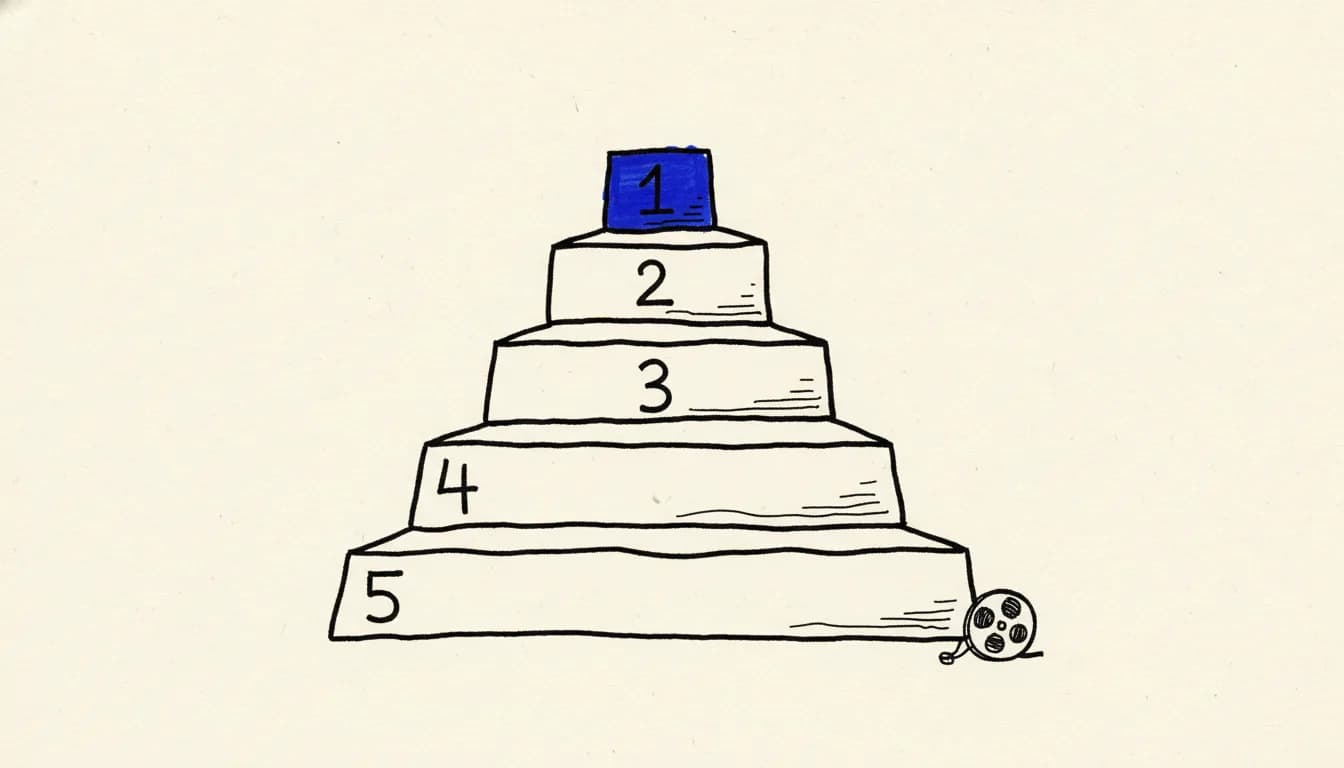
Festival "tiers" are talked about constantly and defined rarely. There is no single ranking body. There are two parallel lists: the official FIAPF accreditation, and the unofficial industry consensus on which festivals matter most. They overlap but are not identical, and knowing the difference helps you build a smarter submission strategy.
The official list: FIAPF accreditation
The Fédération Internationale des Associations de Producteurs de Films (FIAPF) is the global producers' trade body. Its accreditation programme changes over time, and the old habit of quoting a fixed number of “A-list” festivals is risky. In March 2026, FIAPF reformed the system: it scrapped the old four-category structure for one unified list of 49 accredited festivals across 29 countries, and revived an official A-Festival designation for exactly 17 festivals (Cannes, Berlin, Venice, Locarno, San Sebastian, Toronto, Annecy, Clermont-Ferrand, Busan, Mar del Plata, Shanghai, Cairo, IFFI Goa, Tokyo, Warsaw, Karlovy Vary, and Tallinn Black Nights). Because FIAPF can revise this, check the live FIAPF list before quoting festival status in a funding application.
What matters strategically is not the acronym alone. FIAPF accreditation can be useful for producers, funders, and national film bodies; it does not automatically tell you whether a festival is the best launchpad for your specific film.
Many major North American and documentary festivals are not best understood through FIAPF status. Toronto (TIFF) is now one of the 17 FIAPF A-Festivals, but Sundance, SXSW, Tribeca, Hot Docs, and Sheffield DocFest are not accredited at all. They matter because of press, buyers, awards routes, and programming identity, not because of FIAPF. Accreditation and prestige are two separate things.
The unofficial industry tier 1
When the industry talks about "tier 1", they usually mean:
- Cannes
- Sundance
- Berlinale
- Venice
- Toronto (TIFF)
- SXSW
- Tribeca
One note on taxonomy: the scholarly canon is tighter than this. The “Big Three” are Cannes, Venice, and Berlin; the “Big Five” add Toronto and Sundance. Bundling SXSW and Tribeca into a working tier 1 is a looser industry convention, useful for planning but not the standard academic grouping.
These festivals usually share three things: world-class press attention, real industry presence (sales agents, distributors, buyers), and strict premiere expectations. The exact requirement still depends on the section and the year.
Tier 2 mini-majors
Tier 2 is a wider band, and the festivals in it deliver more than the label suggests:
- European tier 2: Locarno, San Sebastian, Karlovy Vary, Rotterdam (IFFR), Sheffield DocFest, Edinburgh, Thessaloniki
- North American tier 2: Telluride, Palm Springs, Fantastic Fest, Tribeca (also frequently tier 1), Hot Docs
- UK tier 2: BFI London, Edinburgh, Encounters (shorts), Sheffield DocFest, Raindance
- International tier 2: Busan, Hong Kong, Sydney, Melbourne, Toronto Inside Out, MIX Copenhagen
Tier 3 specialist and identity festivals
Outfest, Fantasia, BFI Flare, ABFF (American Black Film Festival), AFI Docs, Slamdance, Tampere, Clermont-Ferrand, Bilbao, Aspen Shortsfest, IDFA, CPH:DOX, and dozens of others. For films with a clear identity, theme, or genre alignment, tier 3 festivals often have stronger buyer attendance and tighter community than tier 2 generalist festivals.
The trap of tier-first strategy
Chasing only tier 1 festivals means spending your best premiere status on a very low-probability strategy. If your tier 1 submissions all reject, you may still have your premiere, but you have lost time, money, and calendar positioning.
A smarter sequence: identify two tier 1 festivals where your film genuinely fits the programming taste, submit there first, but also identify three to five tier 2 or tier 3 festivals where your fit is strong and where the calendar still works if the first wave says no. That way the campaign survives a tier 1 rejection.
Tier 2 strengths most filmmakers miss
- You can actually win something (Grand Prix, Audience Award, festival-specific prize)
- You can meet decision-makers (sales agents, distributors, fund officers) in less crowded contexts than tier 1
- Your film gets a proper press cycle in a regional market rather than a single-paragraph wire mention from a tier 1
- The acceptance rate is often better than at the most oversubscribed festivals, though every festival and section publishes its own numbers differently
- Many tier 2 festivals are awards-qualifying (BAFTA, Oscar, BIFA, Canadian Screen Award, regional prizes) without the tier 1 competition
The bottom line on tiers
Tier is a shorthand for "press attention plus industry presence plus premiere requirement". It is not the same as "best for your film". A tier 2 festival where buyers show up beats a tier 1 selection where you are one of 200 films. Tier does not equal outcome.
Frequently asked questions
What are film festival tiers?
Festival tiers are industry shorthand for a festival's press attention, industry presence, and premiere requirement. There is no single ranking body. Tier is not the same as best for your film, and a tier 2 festival where buyers show up can beat a tier 1 selection where you are one of 200 films.
What is a tier 1 film festival?
When the industry talks about tier 1, it usually means Cannes, Sundance, Berlinale, Venice, Toronto (TIFF), SXSW, and Tribeca. These festivals typically share world-class press attention, real industry presence such as sales agents and distributors, and strict premiere expectations. The scholarly canon is tighter: the Big Three are Cannes, Venice, and Berlin, and the Big Five add Toronto and Sundance.
Is FIAPF accreditation the same as prestige?
No. Accreditation and prestige are two separate things. FIAPF accreditation can be useful for producers, funders, and national film bodies, but it does not automatically tell you whether a festival is the best launchpad for your film. Sundance, SXSW, Tribeca, Hot Docs, and Sheffield DocFest are not FIAPF accredited at all, yet they matter because of press, buyers, awards routes, and programming identity.
Should I only submit to tier 1 festivals?
Chasing only tier 1 festivals spends your best premiere status on a very low-probability strategy, and if those submissions all reject you lose time, money, and calendar positioning. A smarter sequence is to submit to two tier 1 festivals where your film genuinely fits, then back that up with three to five tier 2 or tier 3 festivals where your fit is strong and the calendar still works. That way the campaign survives a tier 1 rejection.
RelatedSee tier and fit in one view
Circkit ranks festivals by fit, tier, premiere requirement, and available intelligence, so your shortlist is built around the film, not a generic tier list.