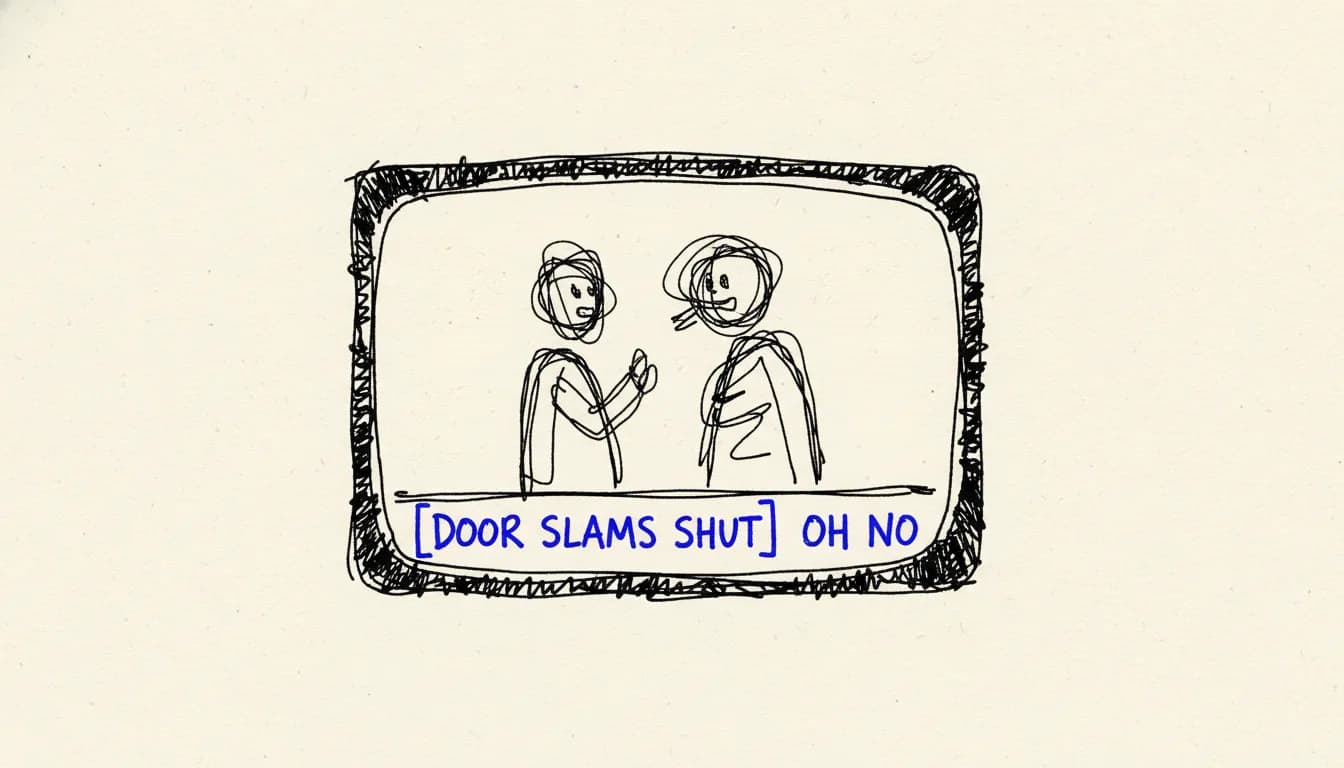
Accessibility has moved from "nice to have" to a practical delivery requirement at many serious festivals. The exact rule differs by festival and by year: some ask for captions at submission, some require accessible versions on acceptance, and almost all require English subtitles when the film is not in English.
Plan captions during sound mix, budget for them like any other deliverable, and check each festival's spec before submitting.
SDH, captions, subtitles: what is what
- Subtitles: translation of dialogue from one language to another. The line of text under a French film when you do not speak French.
- Closed captions (CC): dialogue in the original language, displayed for hearing audiences in noisy environments or accessibility contexts. Dialogue only.
- SDH (subtitles for the deaf and hard of hearing): dialogue, plus speaker identifications, plus non-verbal cues (music cues, sound effects, off-screen sounds). The most complete accessibility track.
The 2026 requirements at major festivals
- Sundance: check the current submission FAQ and rules before submitting. Sundance's public accessibility pages show a strong captioning baseline for festival exhibition, and the submission process asks filmmakers to supply accessible materials where required.
- SXSW: submit a secure working screener link and check the current Film and TV FAQ for caption delivery. SXSW EDU states that accepted films need burned-in open captions, but do not assume that wording is identical for every SXSW Film and TV category.
- TIFF: TIFF's 2026 FilmFreeway terms require English subtitles on submission screeners when the original language is not English.
- Tribeca: check the current rules for the category you enter. Non-English films should be submitted with English subtitles unless the festival explicitly says otherwise.
- Berlinale: verify subtitle rules on the official submission portal for the current edition before uploading; do not rely on last year's section rules.
- Cannes: the Official Selection preselection accepts films without subtitles if the original language is French or English; other original languages need French or English subtitles.
- Hot Docs: confirmed as a filmmaker caption deliverable. English-language feature, mid-length and series titles must provide a closed-captioned track on acceptance, alongside English subtitles for non-English content. Check the current entry guidelines for the exact spec.
- Sheffield DocFest: provides captioned and accessible screenings as part of its own programme, but a mandatory filmmaker-supplied caption track is not something we can confirm at submission. Supply English subtitles for non-English content and verify the current accessibility requirements on acceptance.
Accepted file formats
Two formats you will see repeatedly:
- SRT: the standard subtitle file format. Plain text, timecodes, simple to produce. Almost universally accepted.
- DFXP (or TTML): XML-based timed text format. Used by some festivals for higher-precision subtitle delivery, especially for DCP-bundled subtitle tracks.
For a screener, an SRT file or burned-in subtitles may be enough, depending on the portal. For DCP delivery on acceptance, the festival may request XML/TTML-style files, burned-in subtitles, or a specific caption workflow depending on its projection setup.
What it costs to caption a film
These are planning ranges, not live quotes. Vendor pricing changes by language, turnaround, accuracy level, accessibility specification, and whether a human editor reviews the file.
- DIY (using software like Subtitle Edit, Aegisub, or YouTube's auto-caption editor): free, but slow. Expect 8 to 12 hours of work per hour of film for SDH quality.
- AI-assisted services with an editing pass: often a low per-minute line item, but check the current quote before budgeting a feature.
- Professional captioning house: usually more expensive than AI-assisted workflows, especially for SDH, rush delivery, or multiple languages.
- Translated subtitles (English to a foreign language): £3 to £15 per minute on top.
SDH conventions worth knowing
SDH does more than transcribe dialogue. The accessibility standard includes:
- Speaker identification ("[TARIQ]:") when the speaker is off-screen or ambiguous
- Music cues ("[gentle piano music]")
- Sound effects relevant to plot ("[door slams]", "[engine revs]")
- Tone indicators where critical to meaning ("[whispering]", "[sarcastic]")
- Foreign-language dialogue marked as such if the film does not translate it on screen
A good SDH track tells a deaf viewer what is said and what the sound design is doing. That is craft, not transcription.
Legal context
The push toward SDH at festivals reflects wider legal frameworks:
- ADA (Americans with Disabilities Act): US public accommodations have accessibility obligations, which influences how US festivals plan screenings and audience services.
- CVAA (Twenty-First Century Communications and Video Accessibility Act): broadcast and online-video accessibility rules shape expectations around captions, especially when festival content is streamed or distributed.
- European Accessibility Act: EU accessibility requirements are raising expectations for digital services and consumer-facing content.
- UK Equality Act 2010: UK public-facing services have reasonable-adjustment duties, which is one reason UK exhibitors and festivals pay attention to access provision.
The practical recommendation
For a professional festival submission package in 2026, prepare:
- An English-language SDH SRT file
- An English-language subtitle SRT file (without SDH cues) for non-English films
- One foreign-language subtitle file per market you target (French and/or Spanish are the most useful)
- A delivery-ready caption or timed-text version you can convert to the format the festival requests on acceptance
Professional same-language SDH in the UK tends to start at around £3 per minute, so budget roughly £30 to £200 for a short and £270 to £720 for a feature depending on length and dialogue density, then get a current vendor quote before locking the budget. The cost of not having captions is increasingly a delivery problem at exactly the moment you should be celebrating an acceptance.
Frequently asked questions
What is the difference between SDH, closed captions, and subtitles?
Subtitles translate dialogue from one language to another, such as the text under a French film for a viewer who does not speak French. Closed captions show dialogue in the original language for hearing audiences in noisy environments or accessibility contexts, and are dialogue only. SDH, subtitles for the deaf and hard of hearing, adds speaker identifications and non-verbal cues like music cues and sound effects, making it the most complete accessibility track.
Do film festivals require captions or subtitles to submit?
The exact rule differs by festival and by year. Some ask for captions at submission, some require accessible versions on acceptance, and almost all require English subtitles when the film is not in English. Treat captioning as part of your submission package and check each festival's current spec on its official submission portal before you submit.
What subtitle file format do festivals accept?
Two formats come up repeatedly. SRT is the standard subtitle format, with plain text and timecodes, and is almost universally accepted. DFXP, also called TTML, is an XML-based timed text format used by some festivals for higher-precision delivery, especially for DCP-bundled subtitle tracks. For a screener an SRT file or burned-in subtitles may be enough, while DCP delivery on acceptance can require XML or TTML files or a specific caption workflow.
What should I include in a festival caption package?
A professional package typically includes an English-language SDH SRT file, an English-language subtitle file without SDH cues for non-English films, one foreign-language subtitle file per market you target, and a delivery-ready timed-text version you can convert to the format a festival requests on acceptance. Pricing varies by language, turnaround, accuracy level, and whether a human editor reviews the file, so get a current vendor quote before locking the budget.
RelatedKeep access notes with the submission
Circkit keeps festival deadlines, notes, and requirements close to your submission tracker, so access and delivery questions are harder to lose.